


Diagnosing Healthcare -
The Black Health Equity Initiative

Diagnosing Healthcare
Our most awarded film to date, and it’s still picking up momentum!
Seven festivals. Two wins for Best Documentary Feature.
A documentary about what actually happens when Black patients walk into an American exam room. Told by the people who lived it, and by the doctors working to change it.
Why we made it
We didn't set out to make this film.
We were running a project for Stanford, sitting with a group of Black women and asking them two questions. What is your experience when you go shopping? What is your experience when you try to access healthcare?
The room was filled with doctors, lawyers, professors and university administrators. Highly educated, well connected, and well insured Black women. Exactly the people the system is supposed to work for.
By the end of the second question, everyone in the room was crying.
Before we left, I asked whether they would be interested in participating if we created a documentary specifically focusing on this. They all agreed, and when the time came, they are who I started the interviews with. It was a unanimous yes, from a group of women describing things that are extremely difficult to say out loud.
Then came two years of fundraising, planning, and research. When we came back, we sat down with each of them one on one and recorded their stories in full.
What that first room told us held true everywhere we went afterward. Income doesn't protect you. Education doesn't protect you. Insurance doesn't protect you. These aren't unlucky encounters with a few bad doctors. This is a field that was built on the backs of Black women and Black people.
None of that should be shocking. It just hasn't been said this way, by the people living it and the people working to change it.
The film is story-led and statistic-backed, not the other way around.
How We Made it
Story-led doesn't mean unsupported. Those two years were spent making sure every experience in this film sits on solid ground.
We partnered with students and researchers at Stanford, Yale, UCLA, and the University of Oregon, read a few hundred articles and roughly a dozen books, and met with doctors and researchers before we ever picked up a camera. Every partnership followed the same path: sit down with a physician, walk them through the project and its goals, take their feedback, then ask who else we should be talking to. Nearly every interview in this film came from those referrals.
From there we ran preliminary interviews with doctors and patients around the country, then filmed roughly 70 interviews across eight states.
The result is a film built with the Black medical community rather than one made about it.
Behind the Scenes
We filmed the trips too. These are the cut scenes, the long drives, and the long travel days that don’t make the film.
Having learned that we would prefer not to travel in winter storms our second trip was in late August. We flew into DC for our first set of interviews, then took the train the New Haven, before driving to Boston.
We hope you enjoy watching behind the scenes these as much as we enjoyed creating them.
The first trip was in the heart of winter. Flying into Texas during the coldest week of the year and thinking there was no way it could get colder. Then we landed in Michigan and were welcomed by -8 degree weather. Finally we brought our second documentary Disrupting Dayton back home to Dayton while we continued interviewing patients.
How the film creates impact
A film only matters if it changes something after the credits. Here's how this one is built to do that.
Continuing Medical Education
We're in the final stages of submitting Diagnosing Healthcare for CME accreditation through UCSF, with formal learning objectives, discussion questions, and supplemental resources developed alongside it. Once approved, practicing physicians will be able to earn continuing education credit for watching and discussing the film.
Free Community Screenings
We're going back. Every place we filmed gets a free public screening, hosted with local organizations already doing healthcare work in that community. Each one pairs the film with a physician panel, connections to doulas, and free health resources on site.
Classrooms and Clinics
The film is screening at medical schools, colleges, and high schools, including partner institutions where it's used to train the next generation of physicians on the history and the present-day patterns the film documents.
87% of audience members leave the film saying they now have the tools to better navigate the healthcare system.
From pre- and post-screening surveys, March 2026.
The Helpful Healthbook
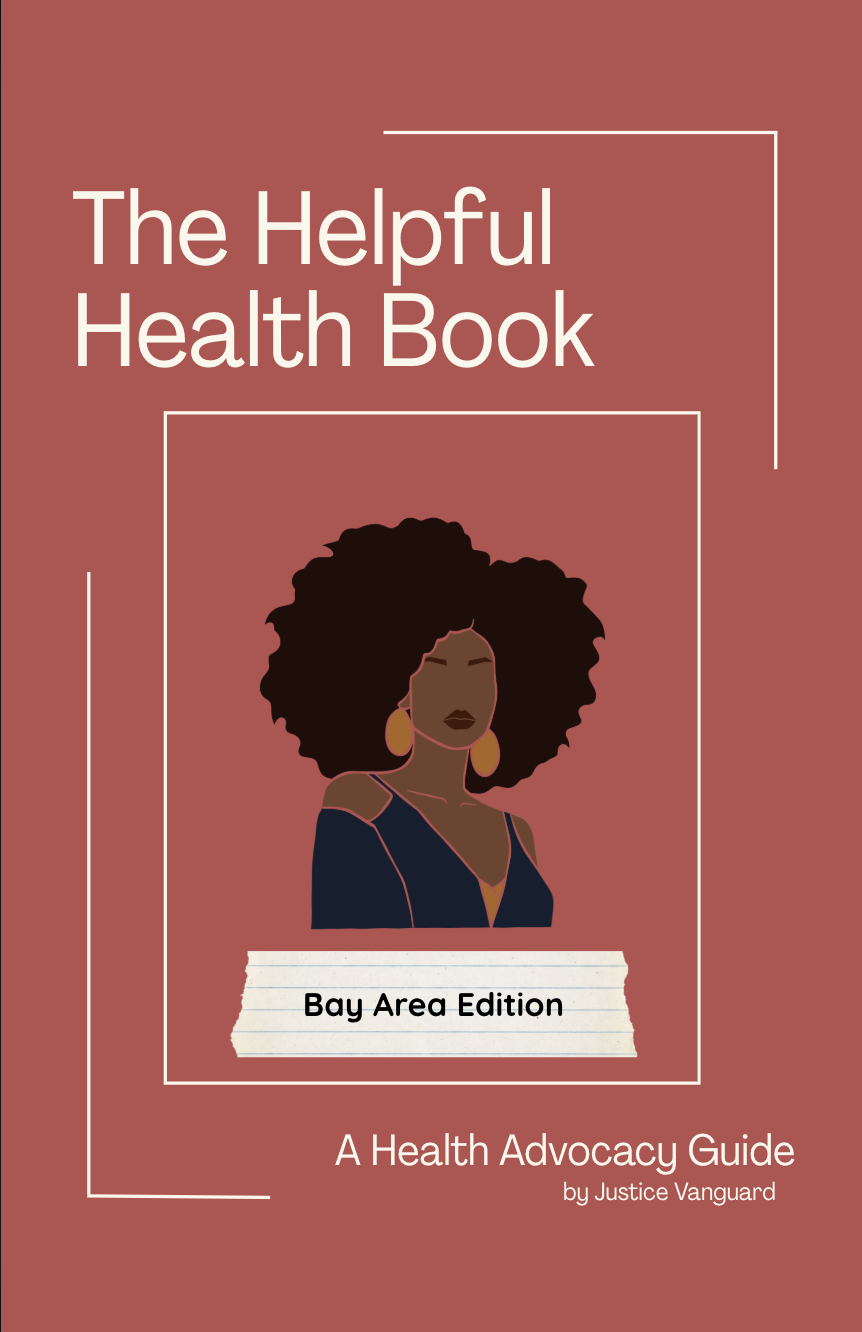
Every screening comes with something people can take home.
The Helpful Health Book is a guide to advocating for yourself and for the people you love inside a medical system that doesn't always make it easy. It covers your rights as a patient, how to prepare for and push back during an appointment, how to show up as an advocate for someone else, and where to find trusted local care and support.
Available as a free digital download and as a printed zine at screenings.
Boston and Washington, DC editions coming soon.